
B.Tech Computer Science Engineering is usually the first option that comes to mind when students finish Class 12. For many families, the discussion almost starts and ends there. Students hear it from friends, coaching teachers, seniors, videos, and even neighbours. Parents hear it from relatives and other parents whose children are already “in the computer field.”
The confusion is not because people are careless. It happens because most information available is incomplete or one-sided. Colleges talk about placements. Online videos talk about success stories. Coaching centres talk about ranks and cut-offs. Very few people sit down and explain what the course actually demands from a student for four years.
Another reason for confusion is that Computer Science Engineering is treated like a shortcut to a job, not like an academic and technical course. Many students think it is only about learning one or two programming languages. Some parents believe that any college offering CSE is good enough. Both assumptions create problems later.
B.Tech Computer Science Engineering is concept-heavy, time-consuming, and requires continuous self-learning. I have seen students who enjoy logic, problem-solving, and structured thinking do well in this branch. I have also seen students who chose CSE due to pressure or fear of missing out feel lost, stressed, and confused by the second year.
This blog exists to reduce that confusion. Not to promote Computer Science Engineering. Not to discourage it either. The aim is simple: to show the ground reality of this course in clear, spoken English, so students and parents can take a decision with open eyes, not assumptions.
What Is Computer Science Engineering?
Computer Science Engineering is about understanding how computers think and how humans can give clear instructions to computers. These instructions are not given in plain English. They are given through logic, structure, and programming languages.
Many students come with the idea that CSE means only coding. That is only one part of it. Coding is like writing sentences. Computer Science is about understanding the grammar behind those sentences. If the grammar is weak, the code may work sometimes but will fail when problems become complex.
This branch focuses on:
- How software is designed and built
- How data is stored, processed, and protected
- How operating systems manage tasks
- How different systems talk to each other through networks
A lot of thinking happens before writing code. Students need patience to sit with problems, understand errors, and try multiple approaches. There are no instant results here. Progress is slow in the beginning, and that is normal.
Another important point students don’t realise early is that Computer Science keeps changing. New tools and technologies come regularly. The course does not train students for one specific job. It tries to build a base so students can adapt later. How strong that base becomes depends on both the college and the student’s effort.
What Students Actually Study in B.Tech CSE?
Let’s talk honestly about the academic side. The subjects are not taught randomly. They are spread over four years, with difficulty increasing step by step. While names may change slightly across universities, the core subjects remain similar.
First Year: Foundation Stage
| Area | What Students Face |
|---|---|
| Mathematics | Heavy and continuous |
| Physics / Chemistry | Applied concepts |
| Basic Programming | Logic building starts |
| Engineering Basics | Common for all branches |
Second Year: Core Concepts Begin
| Area | Reality |
|---|---|
| Data Structures | Very important, concept-based |
| Object-Oriented Programming | Requires clear thinking |
| Discrete Mathematics | Abstract and challenging |
| Computer Organization | Understanding hardware logic |
Third Year: Depth and Pressure Increase
| Area | Reality |
|---|---|
| Operating Systems | Complex theory |
| Database Management Systems | Theory + lab work |
| Computer Networks | Technical understanding |
| Electives | Quality depends on college |
Final Year: Application and Self-Responsibility
| Area | Reality |
|---|---|
| Major Project | Mostly self-driven |
| Advanced Subjects | Depends on college exposure |
| Internships | Student effort matters |
| Placement Prep | Competitive environment |
Difference Between Computer Science and Related Branches
This is one area where students and parents get confused the most. Many people think all “computer-related” branches are the same. They are not the same, but they are also not completely different worlds. Let’s understand this in a simple, non-technical way.
| Branch | Main Focus | How It Feels Academically |
|---|---|---|
| Computer Science Engineering (CSE) | Core computer concepts, programming, systems | Concept-heavy, logic-based |
| Information Technology (IT) | Application of software systems | Slightly more application-oriented |
| Artificial Intelligence / Data Science (AI/DS) | Data, patterns, automation | Math-heavy, evolving syllabus |
| Electronics & Communication (ECE) | Hardware, electronics, signals | Mix of electronics + some coding |
- CSE vs IT
In many colleges, the syllabus overlap is very high. CSE goes deeper into core subjects like operating systems and computer architecture. IT focuses more on using and managing systems. In practical life, placement opportunities often overlap, especially in average colleges.
- CSE vs AI/DS
AI and Data Science sound attractive, but these are still evolving branches. In many colleges, faculty and labs are still catching up. Math involvement is higher. Some students enjoy this, some struggle.
No official clarity available on long-term standardisation across all colleges.
- CSE vs ECE
ECE is not a computer-only branch. It includes electronics, circuits, communication systems, and mathematics. Coding exists, but hardware understanding is equally important. Students who dislike physics usually struggle here.
Entrance Exams for Computer Science Engineering
There is no separate entrance exam only for Computer Science Engineering. All these exams are for engineering admission as a whole. Based on your rank, counselling process, and seat availability, you may or may not get CSE.
JEE Main remains the most important exam, but it is not the only path. Many good colleges take admission through their own exams or state-level exams. Students often lose good options simply because they focus on only one exam.
1) National-Level Entrance Exams (Government Colleges Focus)
These exams matter if you are targeting IITs, NITs, IIITs, and central government colleges.
| Exam Name | Colleges Covered | Important Reality |
|---|---|---|
| JEE Main | NITs, IIITs, GFTIs | High competition. CSE seats close very early. |
| JEE Advanced | 23 IITs | Only top JEE Main qualifiers can appear. |
2) University-Specific Entrance Exams (Private Universities)
Many good private universities do not depend on JEE Main. They conduct their own exams, and students miss these because they don’t plan early.
| Exam Name | Institutes | What Students Should Know |
|---|---|---|
| BITSAT | BITS Pilani, Goa, Hyderabad | Very fast exam. Time pressure is real. |
| VITEEE | VIT Vellore, Chennai, AP, Bhopal | JEE scores not accepted. Exam is compulsory. |
| MET | Manipal Institute of Technology | Rank-based counselling. |
| SRMJEEE | SRM campuses | Multiple phases give flexibility. |
3) State-Level Entrance Exams (State Quota Advantage)
These exams are important if you want admission within a particular state. Usually, 85% seats are reserved for state students.
| Exam Name | State / Coverage | Important Point |
|---|---|---|
| MHT CET | Maharashtra | Strong state quota advantage |
| KCET | Karnataka | Government + private colleges |
| COMEDK UGET | Karnataka (Private) | Open to all India students |
| WBJEE | West Bengal | Limited seats, high competition |
| GUJCET | Gujarat | State-focused admissions |
Eligibility Criteria for B.Tech Computer Science Engineering (CSE)
Eligibility rules decide whether a student is allowed to apply for B.Tech CSE.
They do not guarantee admission. Admission depends on entrance exam rank, counselling, and seat availability.
1) Academic Qualifications (Class 12 Level)
Almost all engineering colleges follow a similar basic structure.
| Requirement | What It Means in Simple Terms |
|---|---|
| Board Exam | Class 12 passed from CBSE, ICSE, or State Board |
| Mandatory Subjects | Physics and Mathematics |
| Third Subject | Chemistry (most common) Some colleges allow Biology / Biotechnology / Technical subjects |
| Stream | Science stream only |
Now let’s talk about minimum marks, because this is where confusion starts.
| Type of Institution | Typical Minimum Marks Requirement |
|---|---|
| IITs, NITs, IIITs | Around 75% aggregate in Class 12 (65% for SC/ST/PwD categories) |
| Top Private Universities (BITS, VIT, SRM, etc.) | Usually 60%–70% in PCM |
| State Govt & Other Private Colleges | Often 45%–50% |
2) Lateral Entry (For Diploma Holders)
Lateral entry is for students who have already completed a 3-year engineering diploma.
| Aspect | Reality |
|---|---|
| Who Can Apply | Diploma holders (CS, IT, or related fields) |
| Minimum Marks | Usually around 60% aggregate |
| Entry Level | Direct admission into 2nd year (3rd semester) |
| Course Duration | Reduced from 4 years to 3 years |
Skills Required to Survive and Grow in CSE
You do not need to be a genius, a topper, or a “born coder” to survive in Computer Science Engineering. What you need is the right mindset and steady habits.
From what I have seen over the years, students who do well in CSE usually have these traits:
- Patience with confusion
In CSE, things don’t make sense immediately. Code breaks. Logic fails. Errors appear for no clear reason. Students who don’t panic and keep trying usually move ahead.
- Consistency, not last-minute study
CSE does not reward cramming. Small, regular practice works far better than studying only before exams.
- Willingness to learn on your own
Colleges teach basics. Tools, libraries, and real usage often have to be learned outside the classroom. Students who wait to be “taught everything” feel stuck.
- Comfort with sitting for long hours
A lot of learning happens quietly — reading, practicing, debugging. If someone hates sitting with a problem for long, CSE becomes frustrating.
Placement Reality of B.Tech Computer Science Engineering
There is no guaranteed placement in Computer Science Engineering.
What usually happens during placements:
- Companies shortlist students based on marks, skills, or tests
- Not all students are eligible for all companies
- Some companies hire very few students
- Some students get placed early, some late, some not at all
Another reality students discover late:
- College placement statistics often show highest packages, not average outcomes
- Many roles are entry-level or training-based
- Final outcome depends on skill readiness at that time
Common Mistakes Students Make While Choosing CSE
After years of counselling students and parents, I can say this clearly that most problems don’t come from the course itself, they come from wrong reasons for choosing the course.
Here are mistakes I see again and again:
- Choosing CSE only because others are choosing it
Friends, classmates, relatives, everyone says “Select Computer.” Many students never ask themselves whether they actually like this kind of learning.
Assuming coding interest will come later automatically
- Interest does not magically appear in second or third year. If a student dislikes logical thinking from the start, things usually get harder.
Believing college will teach everything needed for a job
- This expectation causes the biggest disappointment. Colleges teach basics. Skill-building is mostly self-driven.
Ignoring maths discomfort
- Students who are very uncomfortable with maths often struggle, especially in the first two years.
Choosing college name over branch understanding
- Some students take CSE anywhere without checking faculty quality, labs, or peer environment.
Who Should NOT Choose Computer Science Engineering
CSE may not be a good choice if:
- You strongly dislike sitting with logical or technical problems
- You want quick results with minimum effort
- You hate continuous learning and updating skills
- You are choosing CSE only due to family or social pressure
- You expect guaranteed placement or fixed outcomes
There is nothing wrong in choosing another branch or path. The problem is choosing CSE while knowing it doesn’t suit you.
Counsellor Advice Before Finalising CSE
Before finalising Computer Science Engineering, I usually tell students and parents to pause and ask a few honest questions:
- Does the student enjoy problem-solving, even when it’s frustrating?
- Is the student ready for self-learning beyond college classes?
- Is the decision based on understanding, not fear or comparison?
- Are expectations realistic?
CSE is neither a magic key nor a bad choice. It works well for some students and poorly for others.
Still Confused About This Decision?
If you are still unsure whether B.Tech CSE is a safe choice or a risky one for your profile, that confusion is completely normal.
It is always better to get clarity now rather than realise later that the branch does not match your expectations or nature.
WhatsApp Guidance
You can share your academic background and concerns on WhatsApp for a quick, honest review. This is only to help you understand whether Computer Science Engineering makes sense for you.
Frequently Asked Questions
Q. Is Computer Science Engineering only about coding?
A. No. Coding is one part. Concepts, logic, systems, and theory are equally important.
Q. Can an average student survive in CSE?
A. Yes, with consistency and patience. Talent alone is not the deciding factor.
Q. Does CSE guarantee a job after graduation?
A. No. There is no guaranteed placement in CSE.
Q. Is CSE better than IT or AI/DS?
A. It depends on the student and the college. No branch is universally better.
Q. Can students from Tier-3 colleges succeed in CSE?
A. Yes, but they need extra self-effort and discipline.
Q. Is maths very important for CSE?
A. Yes. Maths is used throughout the course, especially in early years.
Q. Does higher study fix weak placements?
A. Not necessarily. Weak fundamentals remain a problem even in higher studies.
Q. Should parents push their child into CSE for safety?
A. Pressure-based decisions usually create long-term stress. Understanding matters more.
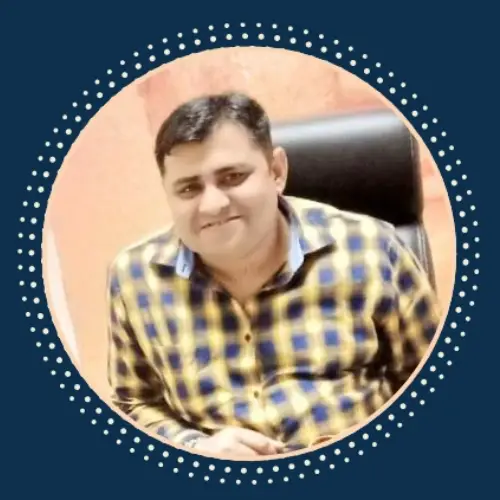
Rajesh Mishra is an admission counsellor and the founder of GLN Admission Advice Pvt. Ltd. with more than 16 years of experience in student counselling and admission guidance. He has worked with thousands of students and parents seeking clarity in complex admission processes across India.
His guidance approach is practical, transparent, and strategy focused. Rajesh Mishra helps families understand counselling systems, admission rules, and college selection in simple language so they can make informed decisions.
Through GLN Admission Advice, he provides guidance for Medical, AYUSH, Engineering, MBA, PGDM, and Law admissions, and regularly shares content to help students understand counselling procedures, cutoff trends, and common mistakes during admission counselling.
Rajesh Mishra is an admission counsellor and the founder of GLN Admission Advice Pvt. Ltd. with more than 16 years of experience in student counselling and admission guidance. He has worked with thousands of students and parents seeking clarity in complex admission processes across India.
His guidance approach is practical, transparent, and strategy focused. Rajesh Mishra helps families understand counselling systems, admission rules, and college selection in simple language so they can make informed decisions.
Through GLN Admission Advice, he provides guidance for Medical, AYUSH, Engineering, MBA, PGDM, and Law admissions, and regularly shares content to help students understand counselling procedures, cutoff trends, and common mistakes during admission counselling.