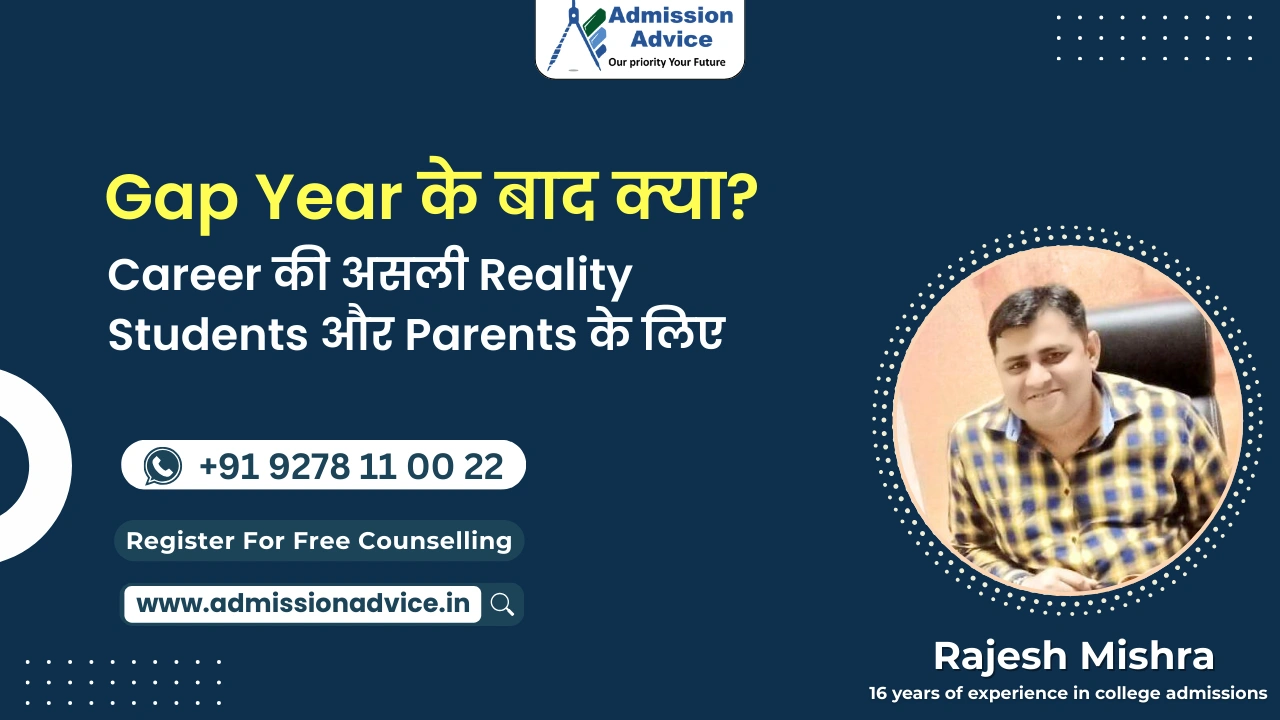
Gap Year के बाद career options को लेकर हर साल counselling में कोई न कोई student या parent यही वाक्य दोहराता है। Exam clear नहीं हुआ, admission miss हो गया, health issue था, family problem थी या फिर confusion में एक साल निकल गया। बाहर से देखने वालों को यह सिर्फ “gap year” लगता है, लेकिन घर के अंदर यह guilt, fear और pressure का पूरा माहौल बना देता है।
Student के मन में लगातार यह सवाल चलता रहता है कि क्या वह पीछे रह गया है। Parent के मन में डर बैठ जाता है कि कहीं समाज, रिश्तेदार या future opportunities बच्चे को judge न करने लगें। यहीं early reality check जरूरी हो जाता है।
Gap year अपने-आप में न तो failure है, न success। यह सिर्फ एक time gap है। फर्क इस बात से पड़ता है कि इस gap को कैसे देखा गया और कैसे handle किया गया। सबसे बड़ी गलती तब होती है, जब families gap year को “damage” मानकर panic में decision लेने लगती हैं। कोई कहता है जल्दी किसी private college में admission करा दो, कोई सलाह देता है एक और drop ले लो—सब ठीक हो जाएगा।
Reality यह है कि gap year के बाद career options खत्म नहीं होते, लेकिन वे automatically safe भी नहीं होते। हर option profile-based होता है। अगर इस stage पर emotional दबाव में decision लिया गया, तो gap year सिर्फ एक साल का नहीं रहता, बल्कि कई सालों की confusion में बदल सकता है।
💬 Blog counselling पर सीधे guidance चाहिए?
हमारे expert Rajesh Mishra जी से WhatsApp पर पूछें — free initial guidance
Gap Year का मतलब क्या होता है और system इसे कैसे देखता है
बहुत से students gap year को personal नजरिए से देखते हैं, लेकिन education system और recruiters इसे अलग तरह से देखते हैं। System के लिए gap year एक data point होता है, judgement नहीं। Colleges और exams यह देखना चाहते हैं कि gap क्यों लिया गया और उस दौरान क्या किया गया। यही जगह है जहाँ misunderstanding पैदा होती है। कई लोग मान लेते हैं कि gap allowed है, तो कोई फर्क नहीं पड़ता। यह half truth है।
Gap allowed हो सकता है, लेकिन conditions के साथ। कुछ exams age limit और attempt limit से बंधे होते हैं। कुछ courses continuous study prefer करते हैं। कुछ institutions gap certificate मांगते हैं, कुछ नहीं। कोई uniform rule नहीं होता। यही कारण है कि “gap acceptable है” को लोग “gap irrelevant है” समझ लेते हैं। Reality यह है कि gap year तब neutral रहता है
जब documentation clear हो, eligibility intact हो और profile coherent लगे। लेकिन gap year risky तब बनता है जब student खुद भी नहीं बता पाता कि उस समय में उसने क्या किया। System को story नहीं, logic चाहिए। इसलिए gap year को समझना जरूरी है, न कि उससे डरना।
Gap Year के बाद सबसे common career options क्या दिखते हैं
Gap year के बाद students के सामने options की कमी नहीं होती, confusion की कमी होती है। Competitive exams में re-attempt, degree courses में re-entry, skill-based courses, vocational programs, internships, apprenticeships, open learning, distance education जैसे कई रास्ते खुले रहते हैं। लेकिन यहाँ सबसे बड़ी गलती होती है list देखकर decision लेना।
कोई student कहता है, “मेरे दोस्त ने skill course किया, मैं भी कर लेता हूँ।” कोई parent कहता है, “अब degree का time निकल गया, जल्दी job-oriented course करवा देते हैं।” Reality यह है कि हर option हर profile के लिए नहीं होता। Competitive exam का रास्ता तभी safe है जब age और attempt margin बचा हो और preparation structured हो।
Degree re-entry तभी meaningful है जब eligibility intact हो। Skill course तभी value देता है जब उसकी recognition और outcome clear हो। Internship और apprenticeship तभी काम की होती हैं जब role और learning defined हो। Gap year के बाद options बहुत हैं, लेकिन filter कम हैं। Counsellor का काम options बढ़ाना नहीं, filters साफ करना होता है।
“यहीं गलती होती है” जब gap year को shortcut से भरने की कोशिश की जाती है
Gap year के बाद सबसे खतरनाक mindset होता है “कुछ भी कर लो, बस gap भर जाए।” यही mindset students को गलत रास्ते पर ले जाता है। कोई fake certification join कर लेता है। कोई unverified fast-track course में पैसा डाल देता है। कोई agent के कहने पर गलत admission ले लेता है। Internet पर “gap year कोई issue नहीं” जैसे statements इस गलती को और बढ़ाते हैं।
Reality यह है कि gap भरना goal नहीं है, career continuity goal है। अगर आपने gap year में कुछ ऐसा किया जो future eligibility को नुकसान पहुँचा दे, तो यह shortcut long-term loss बन जाता है। Gap certificate बनवाने, fake experience दिखाने या documents manipulate करने जैसे रास्ते सबसे risky होते हैं।
Short-term में ये चीजें smooth दिखती हैं, लेकिन future verification या interview stage पर problem बन सकती हैं। Counselling में बार-बार यही बात सामने आती है कि gap से ज्यादा नुकसान गलत gap handling से होता है।
Expectations vs Reality: Gap Year को लेकर जो सोचा जाता है और जो होता है
नीचे दिया गया table डराने के लिए नहीं है। इसका उद्देश्य सिर्फ clarity देना है।
Expectations vs Reality (Gap Year के बाद Career)
| Expectation | Reality |
| Gap year कोई issue नहीं होता | Issue नहीं भी हो सकता है, लेकिन eligibility और context पर depend करता है |
| एक साल drop लेने से selection तय हो जाता है | Selection performance और competition पर depend करता है |
| Skill course degree का substitute है | Skill course और degree अलग value रखते हैं |
| Private colleges gap नहीं देखते | कई private colleges भी eligibility check करते हैं |
| Gap certificate सब problem solve कर देता है | हर institution इसे accept करे, जरूरी नहीं |
| Internship मतलब job ready | Internship learning देती है, job guarantee नहीं |
| Gap के बाद placement आसान हो जाती है | Placement कई factors पर depend करता है |
Safe Cases: कब gap year के बाद decision relatively सुरक्षित माना जा सकता है
Safe case का मतलब zero risk नहीं होता। Safe case का मतलब होता है managed risk। Gap year के बाद safe decision तब बनता है जब student और parent दोनों clarity के साथ आगे बढ़ते हैं। जैसे student ने gap year में documented preparation की हो।
Age limit और eligibility intact हो। Course और exam rules पहले से verify किए गए हों। Backup plan मौजूद हो। Skill course का चयन recognition और outcome देखकर किया गया हो। Safe cases में student emotionally stable होता है और decision pressure में नहीं लिया जाता। Parents भी “बस जल्दी settle हो जाए” mindset से बाहर आकर long-term सोचते हैं।
Safe cases की common trait यह होती है कि student अपनी कहानी खुद explain कर सकता है। Interview या admission form में gap year को छुपाने की जरूरत नहीं पड़ती। Transparency safe बनाती है।
Risky Cases: जहाँ gap year के बाद decision future को और उलझा देता है
Risky cases वे होते हैं जहाँ gap लंबा है और उसका कोई structured उपयोग नहीं हुआ। दो–तीन साल का gap, बिना preparation, बिना skill, बिना documentation, सबसे risky होता है। Borderline age limit वाले students के लिए एक और drop high risk बन सकता है। Completely new field में बिना foundation jump करना भी risky है।
Parents के pressure में लिया गया decision, जहाँ student mentally ready नहीं है, risk को और बढ़ाता है। Risky cases में अक्सर repeated failure का pattern दिखता है। हर साल नया plan, लेकिन कोई clear direction नहीं। Financial नुकसान भी जुड़ जाता है। Coaching fees, course fees, travel, रहने का खर्च। सबसे बड़ा risk confidence का होता है। Student धीरे-धीरे खुद पर भरोसा खोने लगता है।
Grey Area Cases: जहाँ सही और गलत का फर्क साफ नहीं होता
Grey area cases counselling का सबसे sensitive हिस्सा हैं। Student capable है, लेकिन पिछले attempts में failure हुआ है। Age limit है, लेकिन अभी खत्म नहीं हुई। Skill interest है, लेकिन market clarity नहीं है। ऐसे cases में yes या no देना आसान नहीं होता। Grey area में सबसे common गलती comparison होती है। “मेरे cousin ने किया था” या “YouTube पर बताया गया है” जैसी बातें decision को confuse करती हैं।
Grey area में छोटे सवाल decisive होते हैं। अगर next attempt fail हुआ तो क्या plan है। Skill course के बाद income realistic होगी या नहीं। Degree re-entry से eligibility future में affect तो नहीं होगी। Grey cases में decision लेने से पहले pause लेना ही सबसे safe step होता है।
Long-Term नुकसान: गलत gap year decision का असर कितनी दूर तक जाता है
गलत decision का असर सिर्फ एक और साल खराब होने तक सीमित नहीं रहता। Repeated failures confidence को तोड़ देते हैं। Age और attempt limit cross होने पर options permanently बंद हो सकते हैं। Financial नुकसान family पर pressure डालता है। सबसे serious नुकसान mental health पर होता है। Student guilt, anxiety और self-doubt में फँस जाता है।
Career choices fear-driven हो जाते हैं। Interest-based decision की जगह survival-based decision आने लगते हैं। यह career satisfaction को लंबे समय तक affect कर सकता है। इसलिए gap year के बाद लिया गया decision सिर्फ academic नहीं, life decision होता है।
Check-First CTA: आगे बढ़ने से पहले profile समझना जरूरी है
अगर आप confirm करना चाहते हैं कि gap year के बाद आपका case eligible, risky या not eligible है, तो detail भेज कर पहले check करना बेहतर होता है। Gap year के बाद career options में urgency नहीं, clarity काम आती है।
Age, eligibility, preparation level, financial capacity और mental readiness, इन सबको साथ देखकर ही सही दिशा निकलती है। जल्दी किया गया decision कई साल की उलझन बन सकता है। इसलिए apply करने से पहले समझना ज्यादा सुरक्षित है।
Frequently Asked Questions
Gap year के बाद career options खत्म हो जाते हैं क्या?
नहीं। Options रहते हैं, लेकिन eligibility और profile पर depend करते हैं।
Gap year कितने साल तक acceptable होता है?
यह course और exam rules पर depend करता है।
इस पर official clarity available नहीं है।
Gap certificate जरूरी होता है क्या?
कुछ institutions में जरूरी हो सकता है, कुछ में नहीं।
Skill course gap year का best use है क्या?
Skill course useful हो सकता है, लेकिन recognition और outcome देखना जरूरी है।
Private colleges gap year ignore कर देते हैं क्या?
हर private college ऐसा करे, जरूरी नहीं।
Gap year के बाद job guarantee होती है क्या?
नहीं। Job कई factors पर depend करती है।
Drop लेकर competitive exam फिर देना safe है क्या?
Safe या risky eligibility, age limit और preparation पर depend करता है।
Gap year failure माना जाता है क्या?
नहीं। Gap year अपने-आप में failure नहीं है, handling matter करती है।

Rajesh Mishra is an admission counsellor and the founder of GLN Admission Advice Pvt. Ltd. with more than 16 years of experience in student counselling and admission guidance. He has worked with thousands of students and parents seeking clarity in complex admission processes across India.
His guidance approach is practical, transparent, and strategy focused. Rajesh Mishra helps families understand counselling systems, admission rules, and college selection in simple language so they can make informed decisions.
Through GLN Admission Advice, he provides guidance for Medical, AYUSH, Engineering, MBA, PGDM, and Law admissions, and regularly shares content to help students understand counselling procedures, cutoff trends, and common mistakes during admission counselling.